
Before color, artwork or ribbon is added, every invitation begins with its physical structure. The paper, thickness, size, shape and arrangement of the cards determine how the suite feels in your hands and how your guests experience it when the envelope is opened. Structure can be simple or elaborate. A single invitation printed on beautiful stock may be exactly right for a modern celebration. A layered card, vellum wrap, laser-cut gatefold, folio or pocket folder creates a more substantial presentation and can keep several pieces organized. Neither approach is automatically better; the right one is the structure that supports your information, style, budget and mailing plan.
Begin With the Pieces You Need
The structure of the suite starts with its contents. Most invitation suites include a main invitation, a response method and at least one place for additional information. Depending on the wedding, that may become:
- Main invitation
- Response card and response envelope, or online-response information
- Details or accommodations card
- Wedding website or QR card
- Reception card
- Weekend-events card
- Map, itinerary or custom enclosure
- Mailing envelope and optional inner envelope
You do not need to include every possible card. We help determine what your guests need to receive in print, what can live on the wedding website and how the information can be divided without making the suite feel crowded.
Choosing Wedding Invitation Paper
Paper affects color, texture, printing quality and the overall level of formality. It is also one of the first details guests notice when they hold the invitation. Smooth papers create a clean surface for crisp typography, fine lines and full-color digital artwork. Linen and felt textures add subtle movement and a more tactile quality. Cotton papers are soft and substantial and are especially well suited to processes that press into the surface, such as letterpress. Shimmer and specialty papers introduce reflectivity or color without requiring additional artwork. The best wedding invitation paper is not simply the thickest or most expensive option. It is the paper that works with the design, printing process and atmosphere you want to create.

Smooth matte 
Linen textured 
Felt textured 
Cold white shimmer 
Warm white shimmer 
Shimmery linen 
Cotton *** 
Cotton felt ***
One-Ply, Double-Thick and Backed Invitations
One-ply paper is the standard starting point for many professionally printed invitations and can still feel substantial and refined. A double-thick or duplexed invitation creates more weight and rigidity and may allow different papers or colors to be combined on the front and back. A backing layer serves both a visual and physical purpose. It can frame the invitation with a narrow border, introduce an accent color, add thickness or connect the main card to the envelopes and other suite pieces. The main invitation can also be heavier than the response and details cards. Mixing paper weights keeps the invitation substantial without adding unnecessary thickness and mailing weight to every enclosure.


Sizes and Shapes
A traditional rectangular invitation remains popular because it provides comfortable space for wording and fits standard envelope formats. However, the invitation can also be arched, square, circular, oval, scalloped, ticket-shaped or created with a custom contour. Shape changes more than appearance. It influences the amount of usable space, envelope selection, cutting method, assembly and postage. If a nonstandard shape is important to the design, we consider those practical details before finalizing the suite.
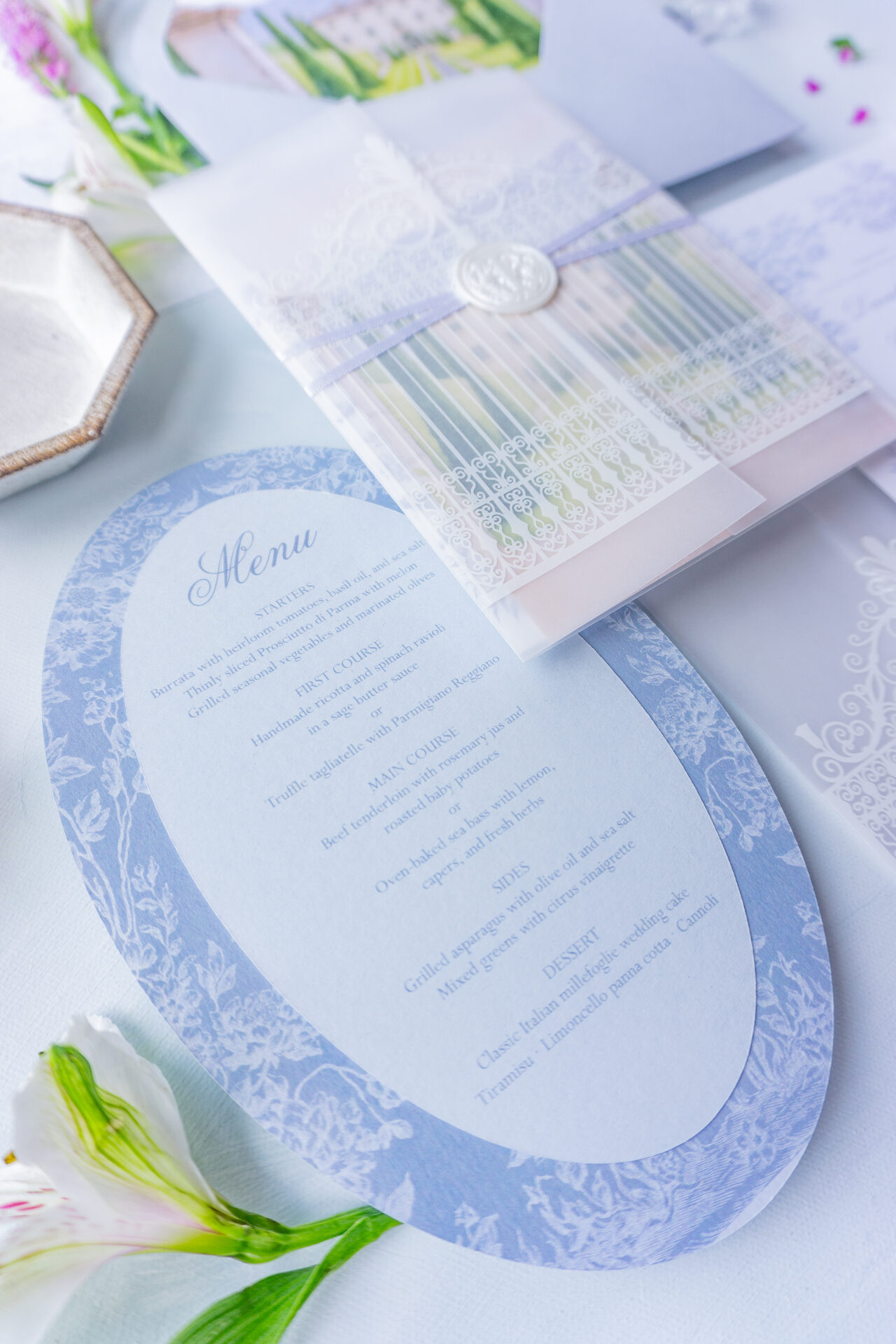


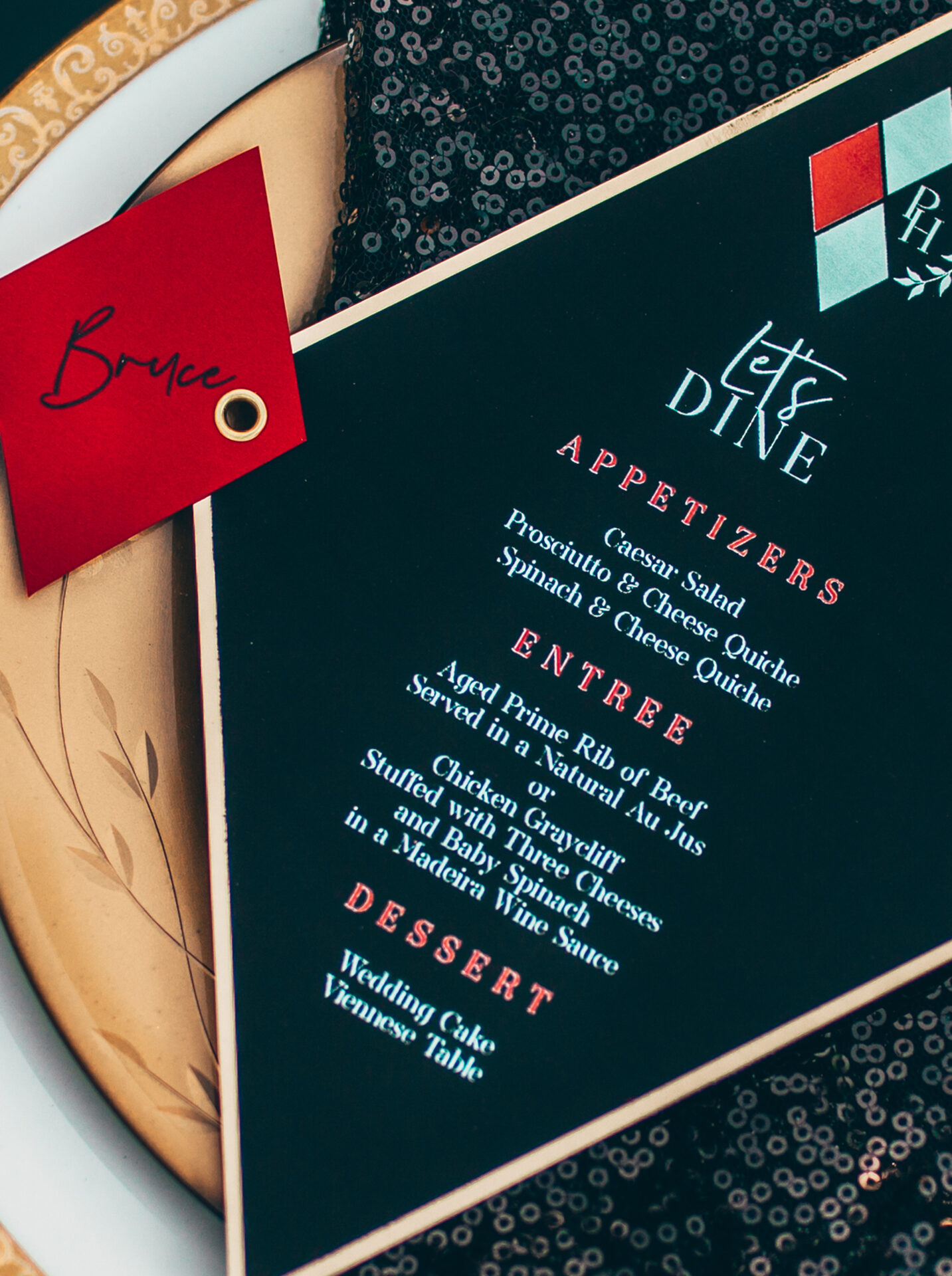

Layered Invitations, Wraps and Folders
Layering can be used to create contrast, organize multiple cards or make the invitation feel more ceremonial.
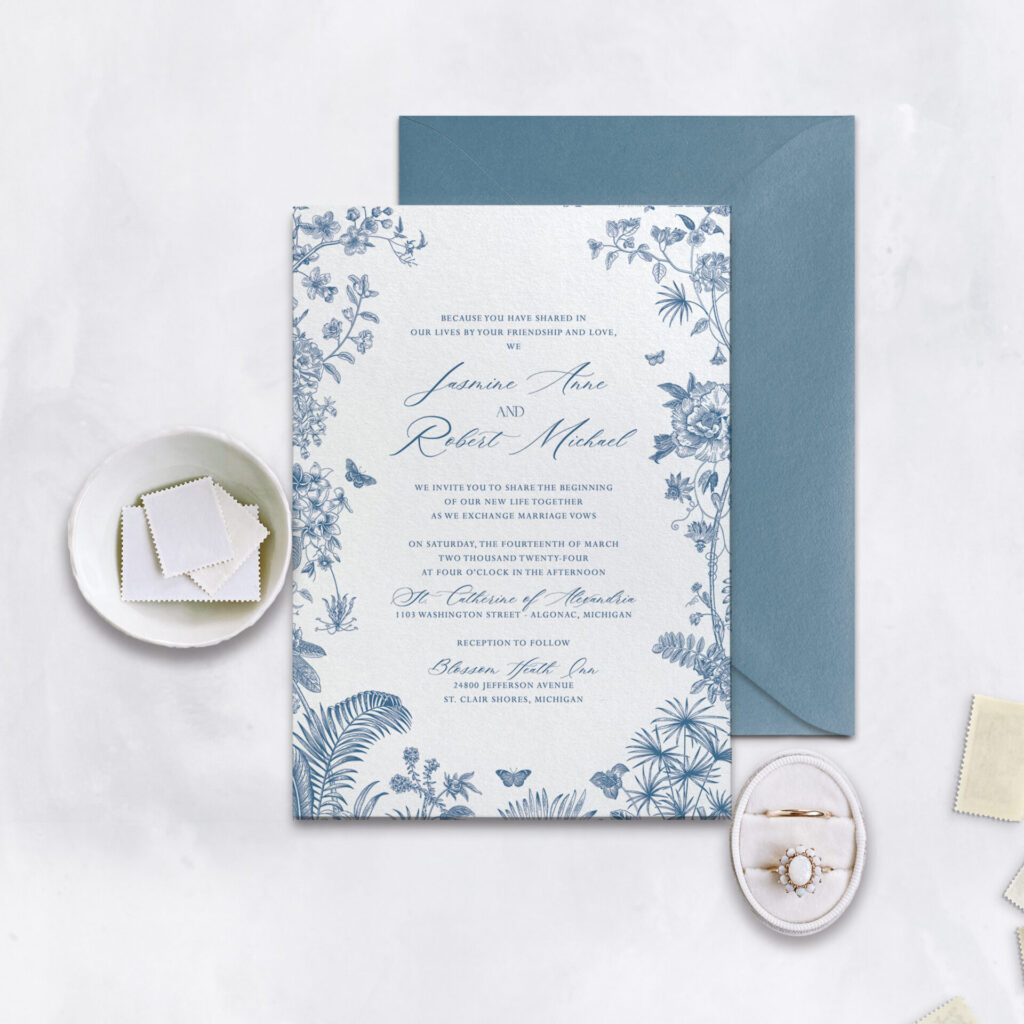
Single panel or duplexed 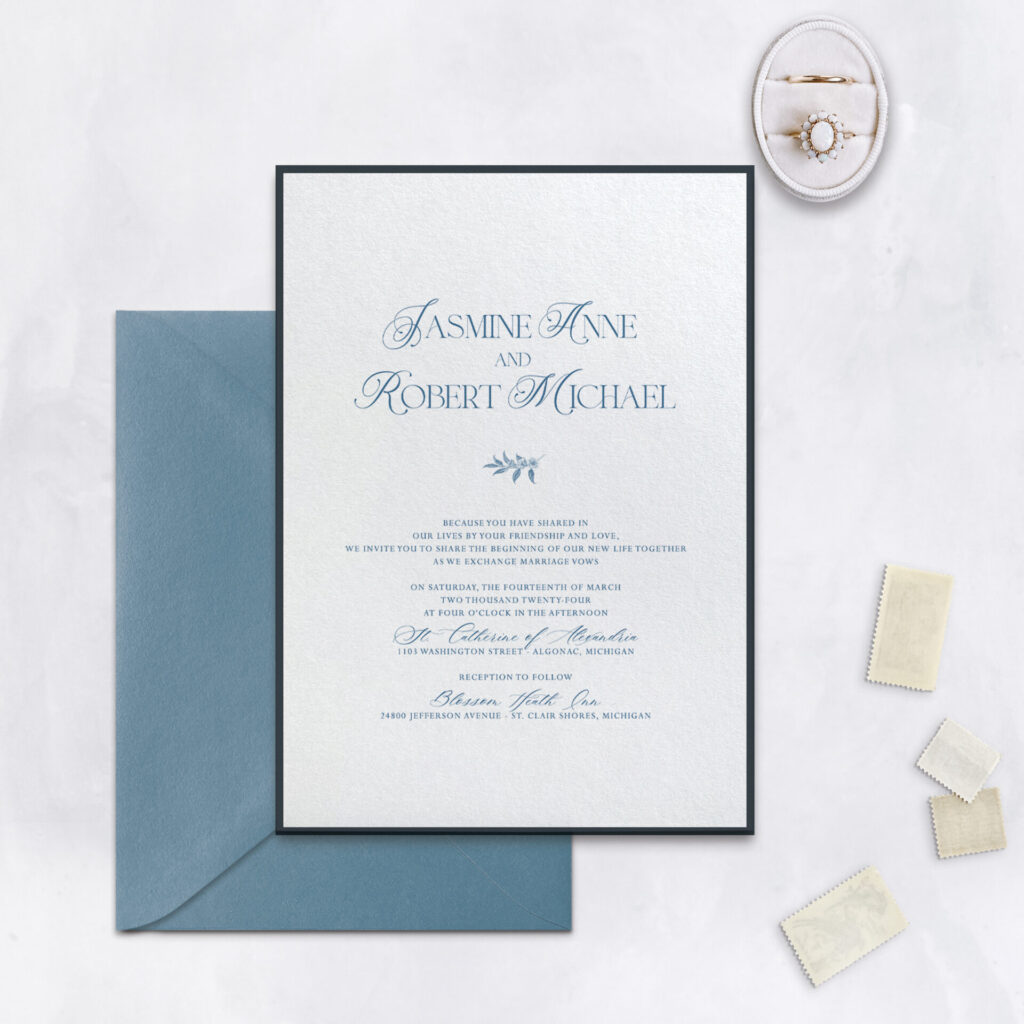
Backing layer 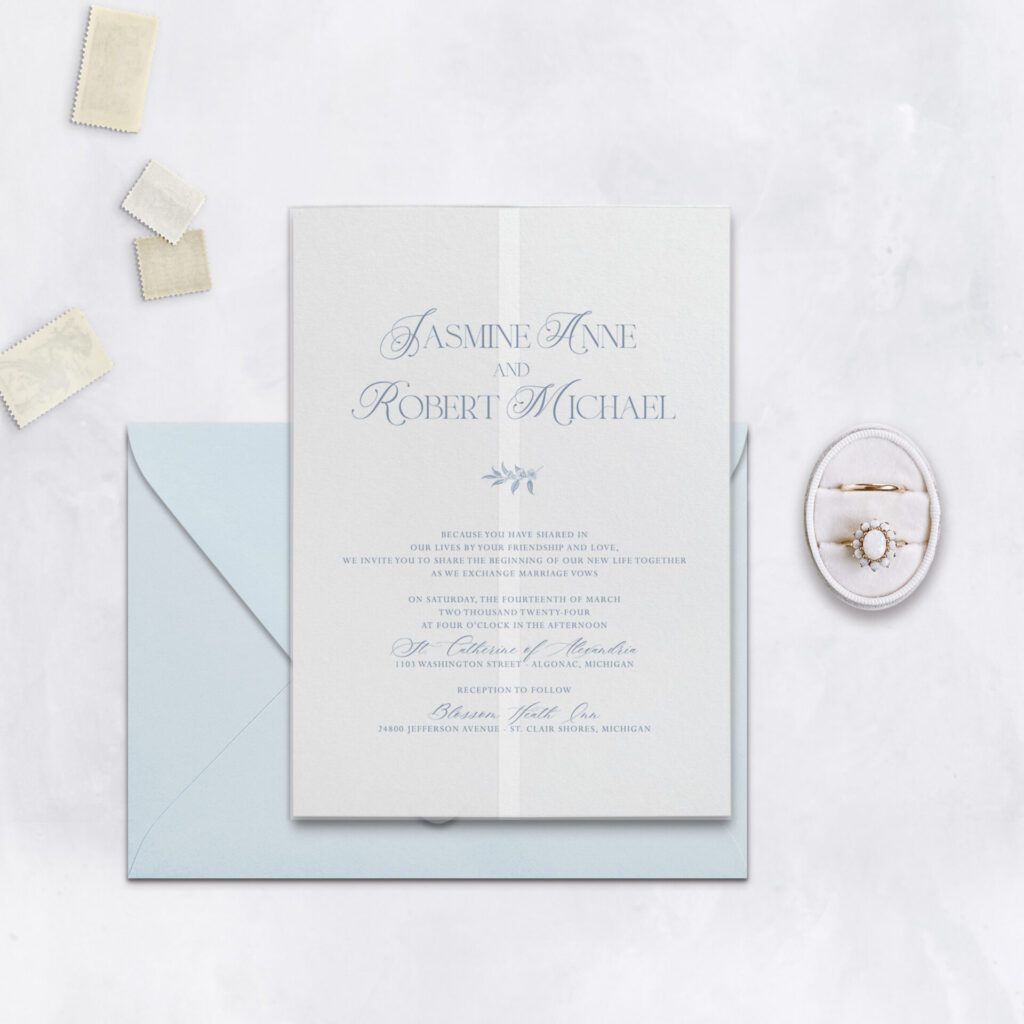
Translucent vellum wrap or overlay 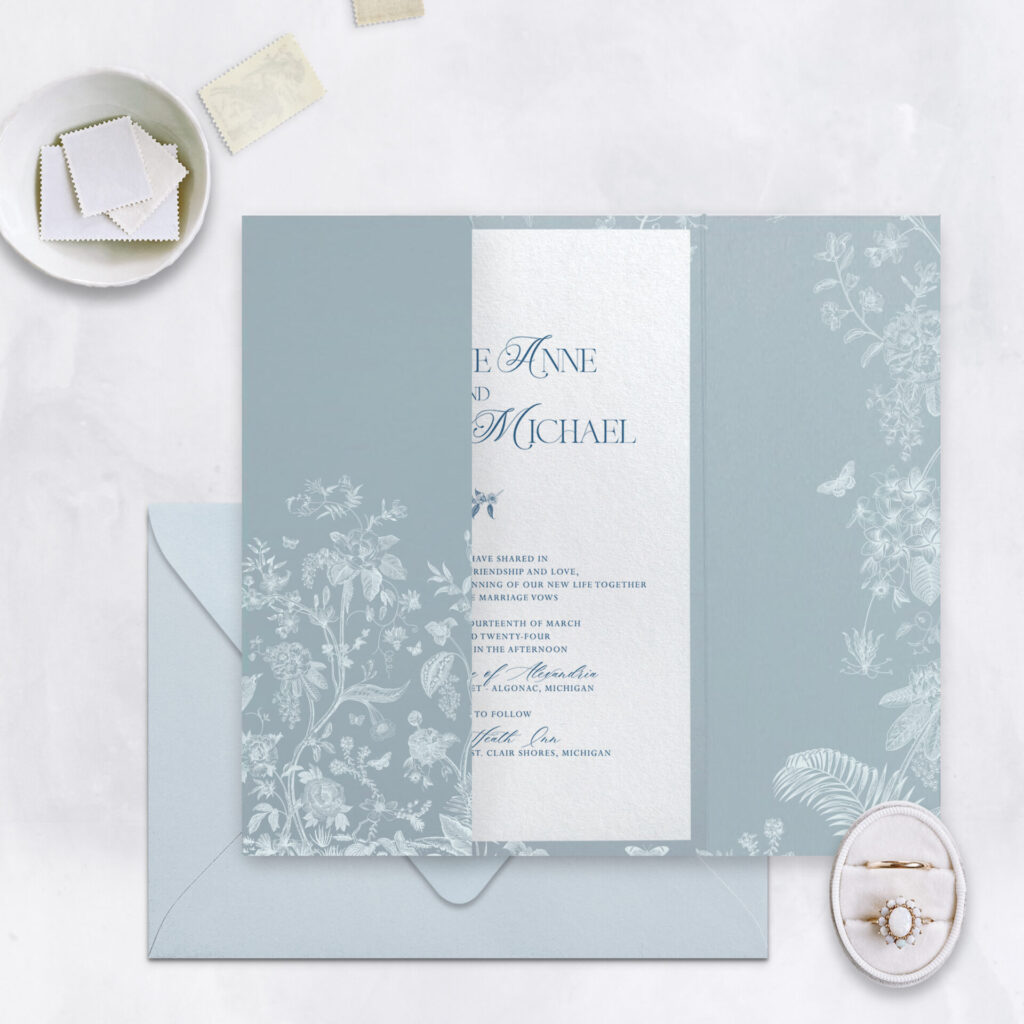
Printed gate or wrap 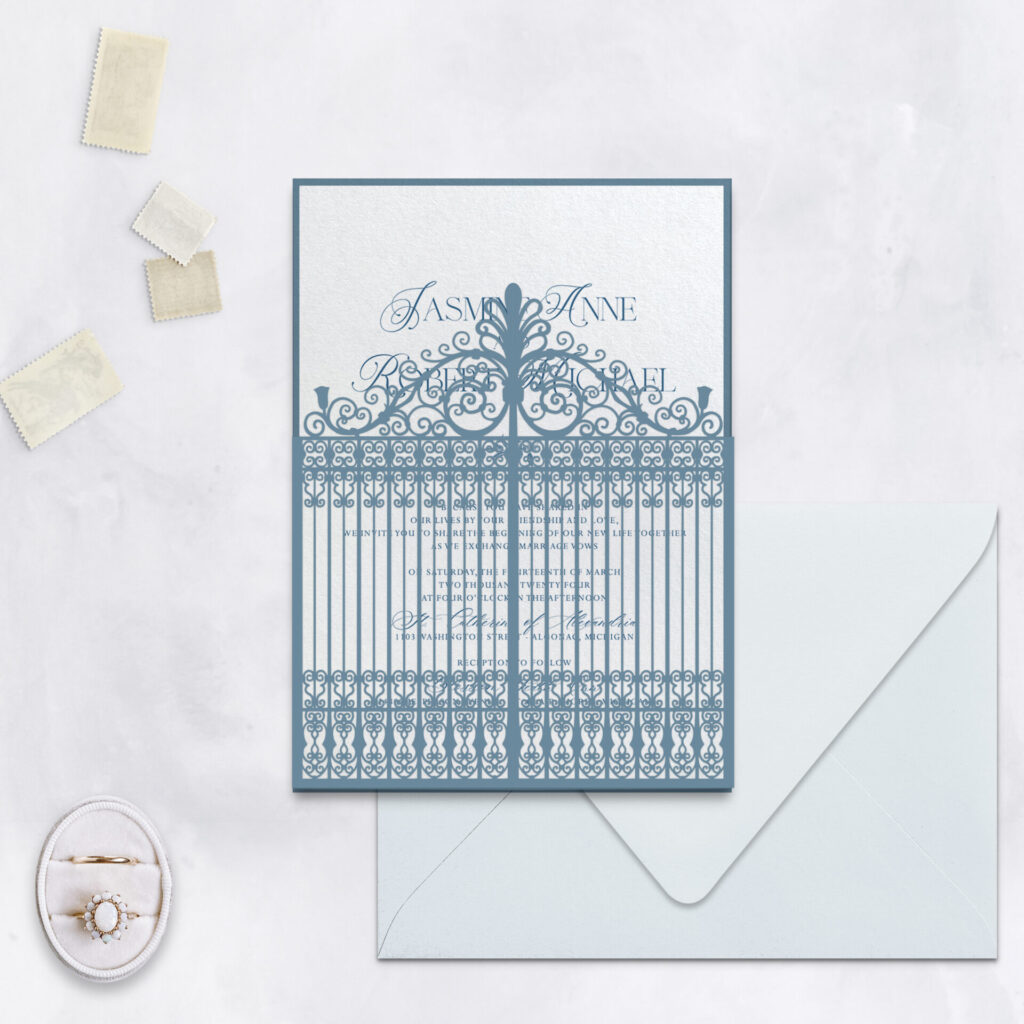
Laser cut wrap or pocket fold 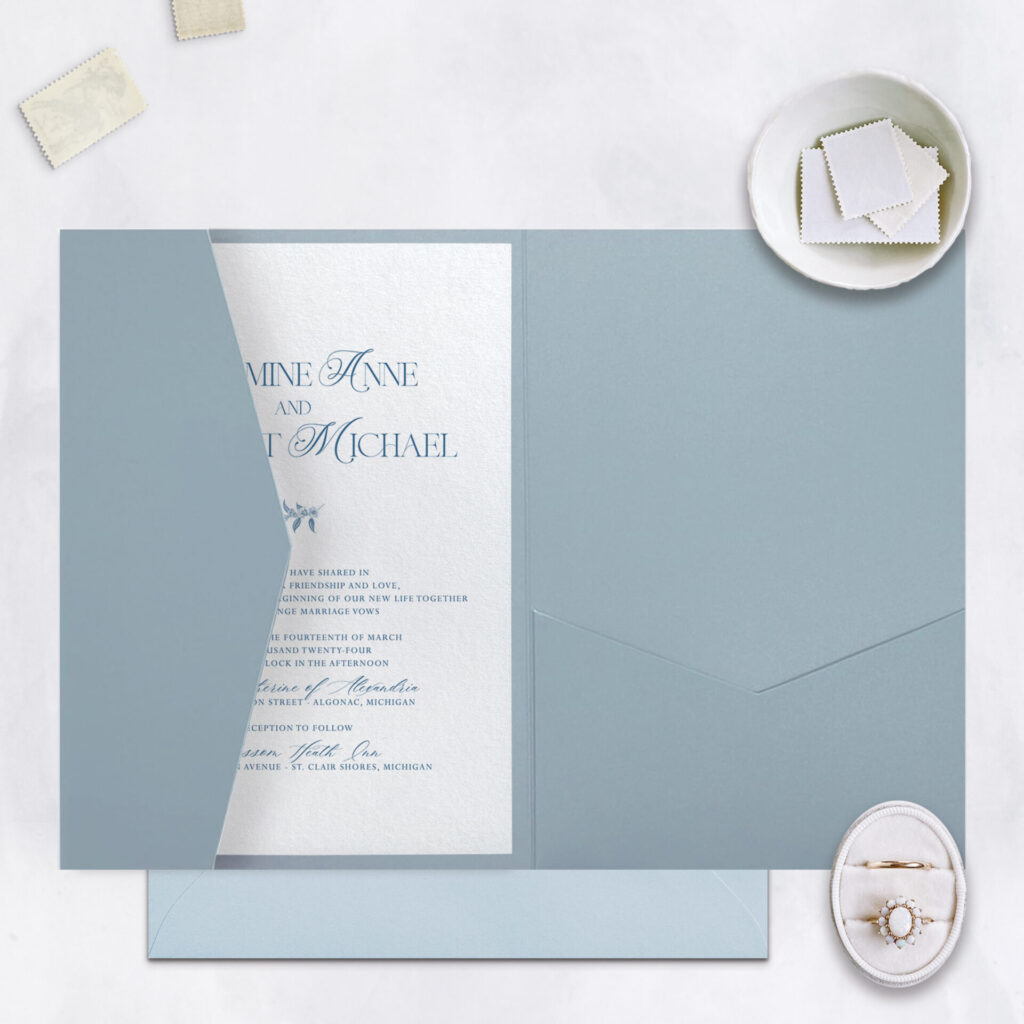
Pocket folder or folio